
Columbus, OH and Central Ohio
Columbus Wood Deck Construction
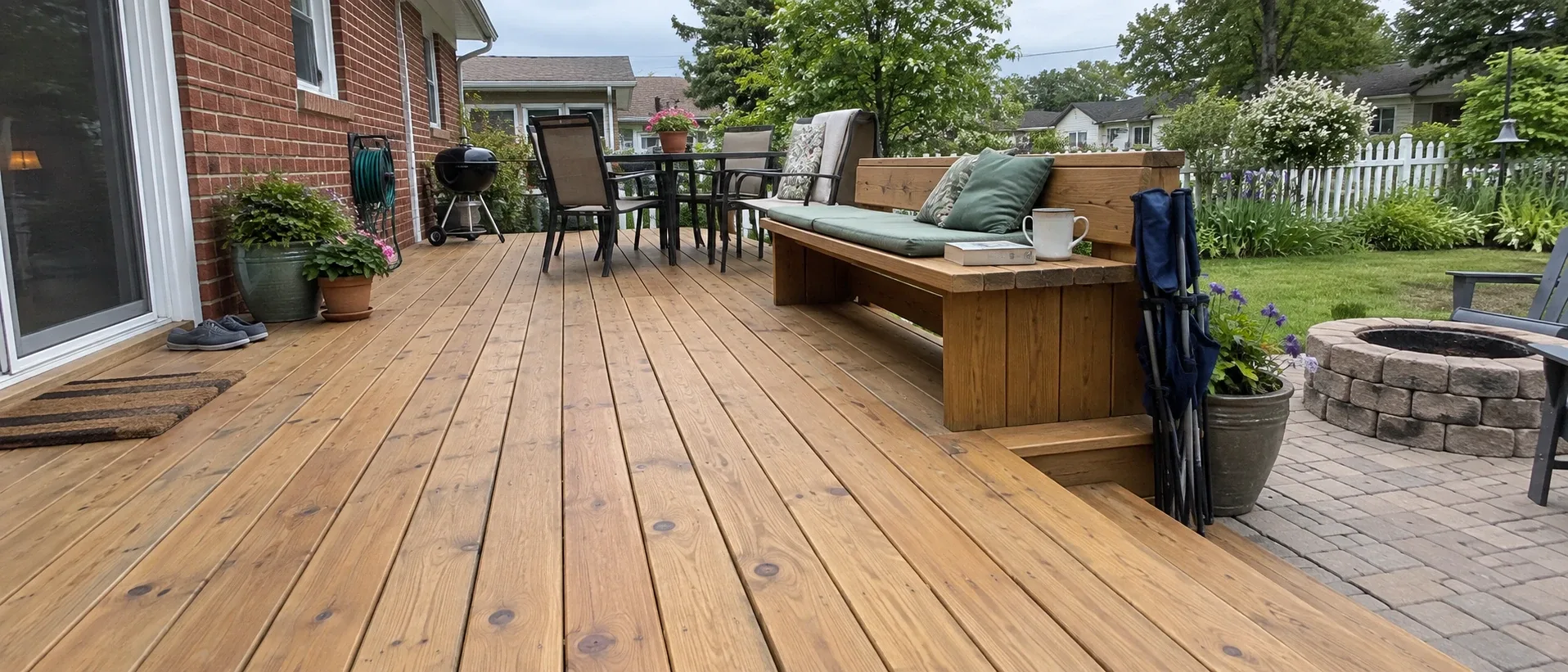
Genuine timber decks in pressure treated pine and western red cedar, framed to shed water and finished on a schedule that keeps them sound. The most deck the money can buy, provided the sealing actually happens.
- Piers set below the frost depth
- Approvals and sign off dealt with
- A written scope first
Columbus Custom Decks frames and finishes timber decks throughout Columbus and the counties around it. Pressure treated pine, western red cedar, thermally modified ash and tropical hardwoods, all set on concrete footings poured below the frost line.
The appeal of timber is simple: it costs less than any composite worth fitting, it feels solid underfoot, and a tired board can be brought back to life with a coat of stain. The catch is equally simple. A wood deck is only as durable as the finish somebody keeps on it.
The wood we build with
Pressure treated southern yellow pine
The cheapest route to a genuinely strong deck, easy to stain and stocked everywhere.
For every joist, beam and post, and for any piece sitting within six inches of the ground, we order material rated for ground contact rather than the lighter above ground grade. The two differ in how much preservative is forced into the timber, and putting the weaker grade near soil is a common reason frames give out a decade too soon.
Western red cedar
Nature builds this one to resist rot and insects without any chemical help. It handles freeze and thaw without twisting, weighs less on the shoulder, and holds a semi transparent stain so the grain still reads through it.
Softer than pine, which means a steel chair leg or a heavy planter will leave its mark. Choose it when you look out at the deck from the kitchen every morning, as owners do around Upper Arlington where the older homes call for it.
Thermally modified ash
Ash raised to a high temperature until the cell walls can no longer feed rot or insects. Dark, stable, and it turns a pleasing grey if left to weather. It sits neatly between cedar and the tropical hardwoods, and it is worth a look if ipe appeals but its price does not.
Tropical hardwood
Ipe, cumaru and garapa. Almost impossibly hard, decades of service, and a higher labour bill because each fixing needs a pilot hole. Left bare it fades to silver and keeps going regardless. Pick this if you want the deck to outlast the loan on the house.
How we frame a wood deck
Footings and post bases
Concrete goes in below the frost line, about three feet down in central Ohio, matched in size to the load the post above carries, and inspected before the pour. The post then sits on a galvanised standoff bracket that keeps its end grain out of the concrete.
Drop a post into an open hole and shovel soil back around it, and the base of that post will rot at the ground line somewhere in its teens. Replacing it later means lifting the deck, and on a tight lot where no machine can reach, that is a costly day.
Ledger connection and flashing
Fixed to the rim board with structural screws or bolts at the interval the span table demands. Then sealed against water: a metal cap along the top, self adhesive membrane tucked behind, every lap facing downhill.
An unflashed ledger, or one fixed with nails, sits behind a large share of deck failures. It is also the first place we look on an older house.
Joist tape
A butyl strip along the upper edge of each joist and beam. It is the least expensive step that lets a timber frame see out a second round of boards.
Hardware throughout
Hangers, post caps, uplift ties and structural screws, each one galvanised or stainless. Treated lumber of the modern kind carries copper, and copper quietly destroys plain steel.
Finishing, and the maintenance reality
When the first coat goes on
Fresh treated boards arrive from the yard wet. A finish applied the same week traps that moisture and then fails. The right moment comes after the timber has dried, which takes two to four months through an Ohio spring or summer.
A free test settles it: throw a little water across the boards, and if it sinks in instead of sitting on top, the wood is ready for a finish.
What to put on it
For this part of the country, a semi transparent oil stain carrying UV blockers is the finish we reach for first. Solid colour coatings and anything that builds a film look striking for a couple of seasons, then start to lift, and removing a failed film from four hundred square feet of boards is a grim way to spend a spring.
The schedule
Rinse the surface with a deck cleaner once a year. Recoat within two or three years, and closer to two on an elevation that faces south or west. Horizontal boards age far faster than the rails and balusters, so treat the walking surface as the priority. Our staining and sealing page sets out what it costs to hand the job over.
When wood is right, and when it is not
Timber earns its place when money is the deciding factor, when you want the grain of real wood underfoot, when the deck is modest enough that upkeep stays small, or when the age of the house makes composite look wrong.
That last case comes up constantly in Upper Arlington and among the century homes around Uptown Westerville. Cedar sits correctly against old brick and painted trim, while a cool grey composite announces itself as a later addition.
Wood becomes the wrong choice the moment nobody in the house is prepared to seal it. That is not a moral point, it is the surest sign of how the deck will look in year eight. If it describes your household, put the money into composite once and be done with it.
Where we build wood decks
We work throughout Columbus and the communities around it, including Dublin, Upper Arlington, Westerville, New Albany and Powell.
Where a timber deck already stands but is coming apart, begin with deck repair rather than replacement. A frame worth saving deserves to be saved, and we will say so plainly before you commit to anything.
Deck cost in Columbus, OH
Set the size and finish, then read the installed range we price from before anyone picks up a phone.
Why homeowners pick Columbus Custom Decks
Piers set below the frost depth
Ground in central Ohio lifts and settles with every freeze. Each post lands on a poured pier that reaches past the frost depth, and that is what keeps a deck flat across a decade of heave and thaw.
Approvals and sign off dealt with
We prepare the drawings, lodge the permit and stand with the inspector, then hand you the signed approval. A deck built without one belongs to the seller at closing.
A written scope first
Boards, framing detail, fixings, schedule and cost all on paper before work begins. Any later change is documented and agreed, never verbal.
Wood Decks questions we get asked
Which timber is best for a deck around Columbus?
Most projects land on pressure treated southern yellow pine. It is the least expensive way to a sound structure and it stains up well. Move to western red cedar when the deck is on show and the budget can stretch by around 40 percent. Whatever the surface, the hidden frame is treated, and any member near soil is ground contact rated.
How often will a wood deck need refinishing here?
Plan on a fresh coat every two or three years. The opening round is the one people get wrong: new boards need to dry first, so the first coat lands roughly two to four months after the frame goes up, not the following weekend. Between the freeze and thaw cycle, the summer sun and the year round rain, central Ohio punishes a finish harder than a dry state or a mild one would. Boards that never see a finish start to check and splinter well before the decade is out.
Will the boards splinter?
Given enough time, treated pine will, and a south facing deck with no finish on it gets there soonest. Cedar throws fewer splinters, and the ones it throws are gentler. A maintained finish prevents almost all of it. Where small children or dogs share the garden and you already suspect the sealing will slide, we would rather point you to composite now than watch you regret pine in five years.
Is cedar worth the premium over treated pine?
Often it is, when the deck is something you look at rather than merely walk on. Cedar weighs less, holds straight, has none of the chemical tang of treated pine, and absorbs a semi transparent stain instead of wearing it on the surface. It dents more easily under heavy furniture, mind. For a back door deck used as a path to the garden, treated does the job and the difference is invisible from indoors.
Can you build in ipe or another hardwood?
Certainly. These timbers are so dense that they shrug off water, resist fire and last for generations. The cost sits in the fitting rather than the material: every fixing needs a pilot hole, the clips must be rated for hardwood, and the blades have to be carbide. Expect a labour bill well above treated or cedar, and expect us to quote it accordingly.
Do you tape the joists on a wood deck too?
Every frame gets it. Water gathers along the upper face of a treated joist and works into the screw holes, and that is precisely where rot takes hold first. A butyl strip adds almost nothing to the invoice and it is what allows a properly built treated frame to see out a second set of boards.